
Best Quality Porcelain Tiles Exporter to Tanzania
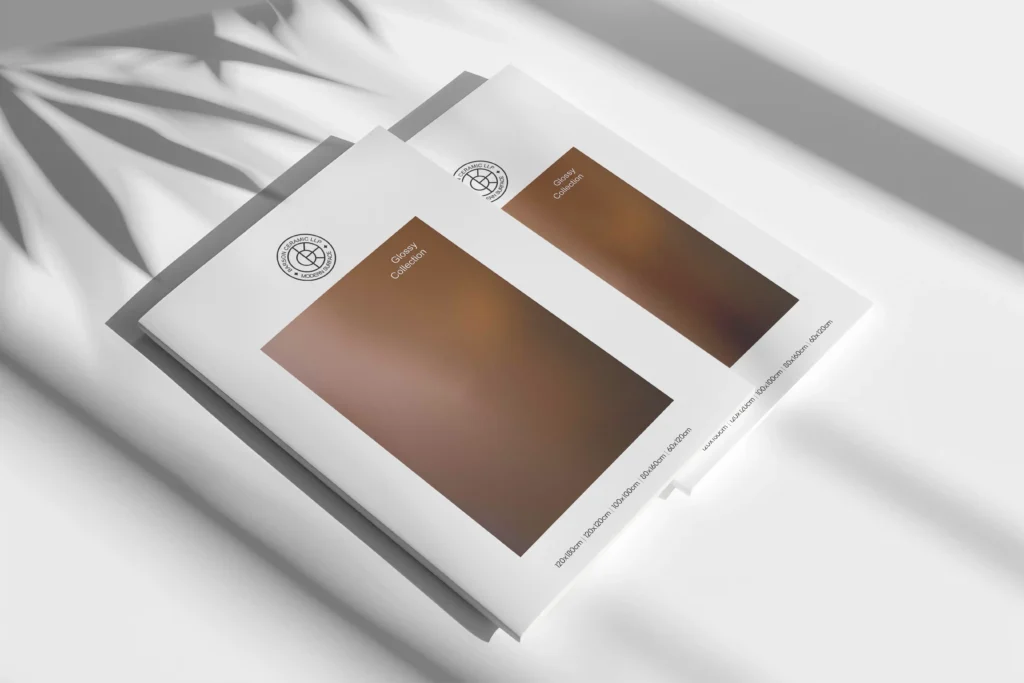
Best Quality Porcelain Tiles Exporter to Tanzania | BARSON CERAMIC LLP
Construction and real estate sectors are expanding rapidly in Tanzania, which translates to high demand for high-quality, aesthetic, and economical flooring materials. Porcelain tiles have been in high demand from contractors, architects, homeowners in Dar es Salaam, Arusha, Mwanza, and other cities. However, identifying a competent porcelain tiles exporter to Tanzania can be quite challenging.
From Indian porcelain tiles’ dominance in the international market, how to import, shipping routes, and container loadings, all information that one would need to get porcelain tiles imported to Tanzania can be found here. This blog will guide you through all you need to know for successful business in Tanzania.
Table of Contents
Why Source Porcelain Tiles from India?
India has become one of the biggest producers of ceramic and porcelain tiles in the world, competing in quality and quantity with China and Spain. A large amount of porcelain tiles is manufactured in Gujarat, and especially in the Morbi cluster of tile production, with the help of modern technologies of firing, digital printing and quality controls.
There are several reasons why Indian porcelain tiles should be preferred for purchasing in Tanzania:
- Reasonable price without loss of strength and design quality
- Big assortment of products, starting from simple matte tiles and ending with glossy tiles in marble and wood textures
- Existing shipping lines from Indian ports to East Africa
- Order flexibility and adaptability to the needs of both small sellers and big construction companies
- Uninterrupted supply lines during all periods of year
Proximity of India to the ports of East Africa through the waters of Arabian sea.
What Makes a Good Porcelain Tile Exporter?
Not every manufacturer is equipped to handle international export. A genuine porcelain tile exporter should offer more than just a product catalog. Here’s what separates a professional exporter from a local trader:
- In-house or verified manufacturing — direct factory access ensures better pricing and quality control
- Export documentation expertise — commercial invoices, packing lists, certificates of origin, and bill of lading handled correctly
- Container loading experience — knowing how to maximize container space while preventing breakage
- Quality certifications — ISO, CE, or other relevant compliance marks
- Transparent communication — timely responses, sample sharing, and clear timelines
- After-sales support — handling claims, replacements, or documentation issues post-shipment
A trustworthy exporter treats each shipment as a long-term relationship, not a one-time transaction — something Tanzanian importers should prioritize when shortlisting suppliers.
Why Tanzanian Importers Should Consider Porcelain Tiles
Porcelain tiles are increasingly replacing ceramic tiles, natural stone, and ordinary vitrified tiles across Tanzania’s residential and commercial construction sectors. The reasons are practical:
- Low water absorption (typically below 0.5%), making them ideal for Tanzania’s humid coastal climate
- High durability, suited for high-footfall commercial spaces like hotels, malls, and offices
- Low maintenance, with stain and scratch resistance far superior to ceramic alternatives
- Aesthetic versatility, mimicking marble, granite, wood, and concrete finishes at a fraction of the cost
- Long-term cost efficiency, since porcelain tiles rarely need replacement compared to cheaper alternatives
As Tanzania’s urban centers expand, especially Dar es Salaam, Dodoma, and Mwanza, porcelain tiles are becoming a standard specification in modern architectural projects.
Large Format Porcelain Tiles for Tanzania
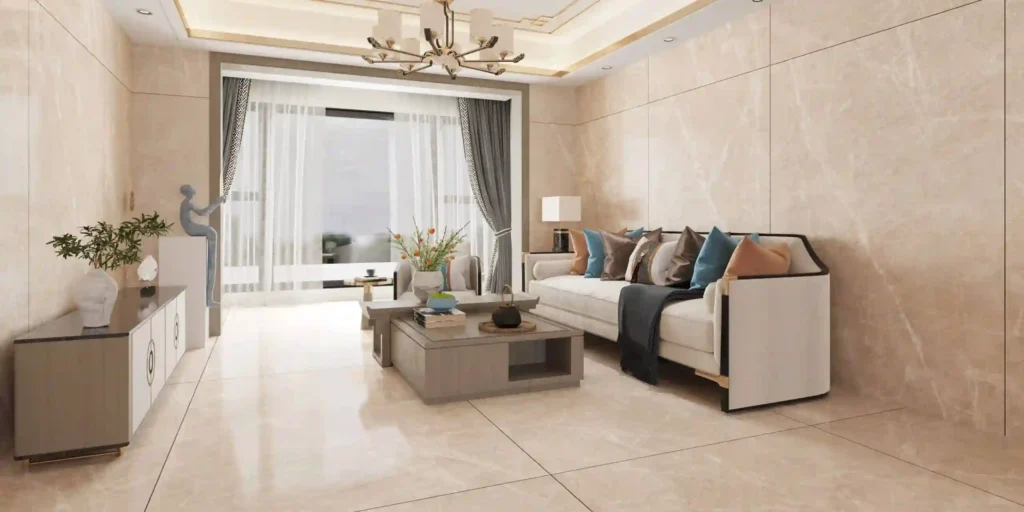
Large format tiles are transforming interior design across East Africa, offering seamless floors with fewer grout lines and a more premium visual finish. Below are the most popular sizes exported to Tanzania.
60×120cm
This is one of the most versatile large-format sizes, suitable for both residential living rooms and commercial lobbies. It balances ease of installation with a spacious, modern appearance, making it a favorite among contractors working on mid-range projects.
100x100cm | 120×120cm
A square large-format option that works exceptionally well in open-plan spaces, hotel lobbies, and showroom flooring. Its symmetrical dimensions simplify tile-laying patterns while delivering a bold, uninterrupted surface look.
120×180cm / 1200×1800mm
The largest and most premium format, often used as a statement flooring or wall-cladding solution in five-star hotels, corporate offices, and luxury villas. Fewer joints mean a near-seamless surface, though installation requires skilled labor and proper handling during transit.
Porcelain Tile Surfaces and Finishes
Porcelain tiles are available in multiple surface finishes, each suited to different applications:
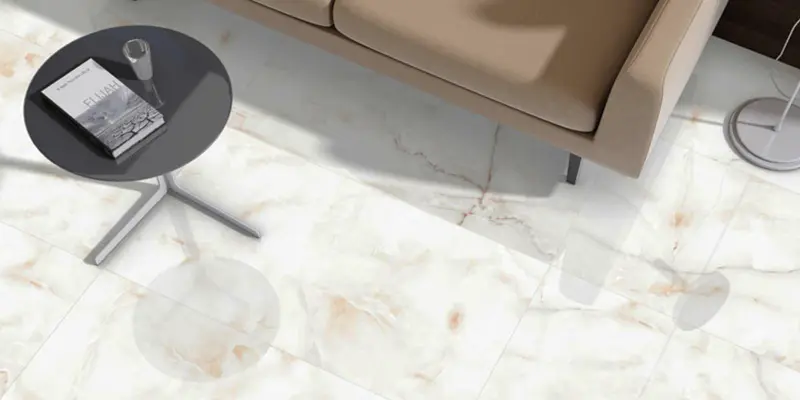
- Glossy/Polished — reflective, elegant, ideal for indoor living spaces and hotel interiors
- Matte — subtle, contemporary, low-glare, popular for offices and modern homes
- Carving/Textured — designed for accent walls and decorative façades
- Rustic/Structured — anti-slip surface, commonly used for outdoor areas, balconies, and pool sides
- Full Body/Double Charge — where the design runs through the tile thickness, offering extra durability against surface wear
Choosing the right finish depends on the application — glossy tiles suit indoor flooring, while rustic or structured finishes are better for wet or outdoor zones common in Tanzanian villas and resorts.
Porcelain vs Ceramic Tiles
Tanzanian buyers often ask whether porcelain or ceramic tiles are the better investment. Here’s a straightforward comparison:
| FeaturePorcelain TilesCeramic Tiles | ||
|---|---|---|
| Water Absorption | Less than 0.5% | 3% to 7% |
| Durability | Very high, dense body | Moderate |
| Best Use | Indoor & outdoor, high traffic | Mostly indoor, low traffic |
| Price | Slightly higher | More budget-friendly |
| Lifespan | 20+ years | 10–15 years |
| Climate Suitability | Excellent for humid regions | Prone to moisture damage |
For Tanzania’s coastal humidity and heavy commercial usage in cities like Dar es Salaam, porcelain tiles offer significantly better long-term value despite the marginally higher upfront cost.
How to Check Porcelain Tile Quality
Before finalizing any bulk order, importers should verify tile quality using these practical checks:
- Water absorption test — genuine porcelain should absorb less than 0.5% water
- Edge and surface inspection — look for chips, warping, or uneven glazing
- Sound test — tapping a porcelain tile should produce a sharp, metallic-like sound, unlike the duller sound of ceramic
- Size consistency (rectification) — rectified tiles have precise, uniform edges for minimal grout lines
- PEI rating — indicates surface wear resistance, important for high-traffic commercial flooring
- Sample request — always request physical samples before confirming a container order
Reputable exporters will happily provide test certificates and samples, which is a strong indicator of transparency and product confidence.
What Tanzanian Importers Should Check Before Ordering
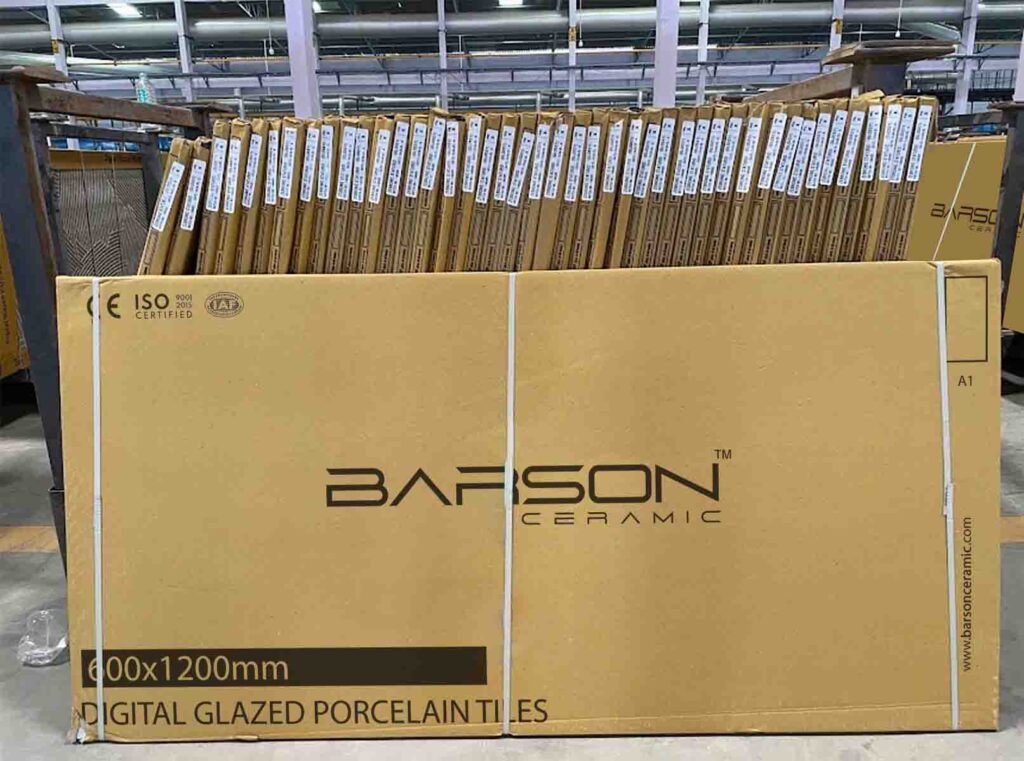
Beyond tile quality itself, importers should evaluate the following before placing an order:
- Minimum order quantity (MOQ) and whether it fits your project or retail needs
- Payment terms — advance payment, LC (Letter of Credit), or partial payment structures
- Lead time for production and dispatch
- Packaging standards to prevent breakage during a long sea voyage
- Export licensing and documentation support from the supplier
- Previous export experience to Tanzania or East Africa specifically
Asking for references or past shipment records to Tanzania can help validate an exporter’s reliability before committing to a large order.
Porcelain Tile Prices in Tanzania
Porcelain tile pricing in Tanzania depends on several factors: tile size, finish, design complexity, and shipping costs from the port of origin. Generally, prices are quoted in two ways:
- FOB (Free on Board) — price at the Indian port, excluding shipping and Tanzanian import duties
- CIF (Cost, Insurance, Freight) — price including shipping to Dar es Salaam port
Large format tiles (120×120cm and above) typically command a premium over standard sizes due to production complexity and higher breakage risk during transit. Importers should always request a detailed, itemized quotation that separates product cost, freight, insurance, and any applicable Tanzanian import duties to avoid unexpected costs at customs clearance.
Shipping Porcelain Tiles from India to Tanzania
Shipping porcelain tiles internationally requires careful planning since tiles are heavy, breakable, and sensitive to handling. Key aspects of the shipping process include:
- Sea freight as the standard mode, given the cost-efficiency for heavy cargo like tiles
- Container types — typically 20ft or 40ft containers, loaded with reinforced wooden pallets
- Transit time — generally ranging from 15 to 25 days depending on the shipping line and route
- Cargo insurance — strongly recommended to cover potential breakage or damage during transit
- Proper documentation — bill of lading, packing list, and commercial invoice must match customs declarations
Working with an exporter experienced in East African shipping routes significantly reduces the risk of delays or documentation errors at the Tanzanian port.
Mundra to Dar es Salaam
Mundra Port in Gujarat is one of India’s largest and most efficient container ports, making it a preferred origin point for tile exports to East Africa. The Mundra to Dar es Salaam route is well-established, with regular sailings from major shipping lines.
This route benefits from:
- Proximity to Gujarat’s tile manufacturing clusters, reducing inland transportation time and cost
- Modern port infrastructure enabling faster container handling and loading
- Frequent vessel schedules, offering flexibility for both urgent and planned shipments
- Reliable transit times, generally shorter compared to routes originating from other Indian ports
For importers planning regular container orders, understanding this shipping corridor helps in better production and delivery planning.
Porcelain Tiles for Hotels and Construction Projects
Tanzania’s hospitality and construction sectors — driven by tourism growth in Zanzibar, Arusha, and coastal regions — increasingly demand premium flooring solutions. Porcelain tiles are particularly suited for:
- Hotel lobbies and corridors, where large format tiles create a luxurious, seamless appearance
- Poolside and outdoor areas, using anti-slip rustic finishes for safety and durability
- Commercial office spaces, benefiting from matte, low-maintenance finishes
- High-rise residential developments, where durability and long-term value matter most
For large-scale hospitality or construction projects, working directly with a manufacturer-exporter ensures consistent batch quality across large quantities — an essential factor when tiling extensive areas like hotel floors.
How to Choose the Right Tile Size
Selecting the correct tile size depends on the space, application, and desired visual effect:
- Small to medium rooms — 60×60cm or 60×120cm tiles reduce visual clutter and grout lines
- Large open spaces (lobbies, halls) — 120×120cm or 120×180cm creates a premium, seamless look
- Outdoor and wet areas — smaller, textured tiles offer better slip resistance and easier handling
- Wall cladding — large format tiles minimize joints for a cleaner, modern façade appearance
Tanzanian importers should also factor in transportation and installation logistics, since larger format tiles require experienced labor and careful handling to avoid breakage on-site.
Container Orders and Product Planning
Planning a container order efficiently helps reduce costs and ensures timely project execution. Considerations include:
- Mixed container loading — combining multiple sizes and designs within a single container to meet diverse project needs
- Full container load (FCL) — most economical for large orders, reducing per-unit shipping cost
- Stock availability — checking whether designs are readily available or require fresh production
- Seasonal demand planning — ordering ahead of Tanzania’s peak construction season to avoid delays
A good exporter will help structure container plans that balance cost-efficiency with project-specific design requirements, especially for repeat or bulk importers.
Quality, Packaging and Export Documentation
Export-grade packaging is critical for tiles, given the long sea journey and multiple handling points before reaching the final site. Standard practices include:
- Reinforced wooden pallets to stabilize tile boxes during transit
- Edge protection and shrink wrapping to prevent shifting inside containers
- Moisture-resistant packaging, important given Tanzania’s humid coastal climate
- Complete documentation set — commercial invoice, packing list, certificate of origin, bill of lading, and PVoC certificate
Proper documentation not only ensures smooth customs clearance in Dar es Salaam but also protects both parties in case of insurance claims for transit damage.
Why Communication Matters
Clear, consistent communication between exporter and importer is often the difference between a smooth transaction and a stressful one. Time zone differences, language nuances, and documentation requirements all demand proactive coordination.
A reliable exporter should offer:
- Prompt responses to inquiries and sample requests
- Regular shipment updates, from production to dispatch
- Clear explanations of pricing, terms, and documentation
- Dedicated support for after-sales queries or claims
For first-time importers especially, working with an exporter who communicates clearly in English and understands East African business practices makes the entire process significantly easier.
Porcelain Tiles Exporter to Dar es Salaam
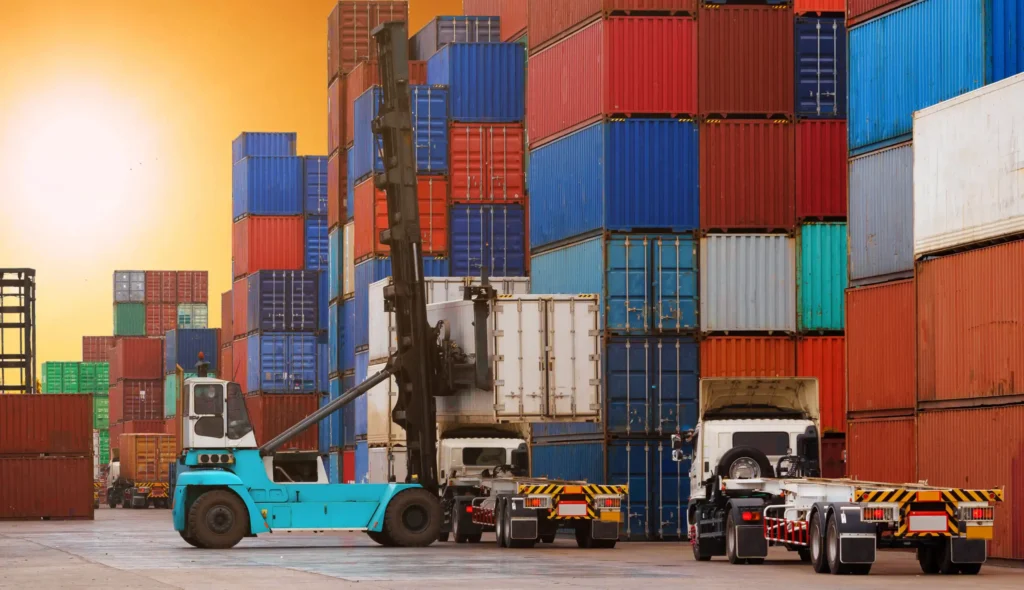
As Tanzania’s primary port city and commercial hub, Dar es Salaam receives the majority of tile imports destined for both local use and onward distribution to other regions. Exporters familiar with this port benefit from:
- Established customs clearance procedures specific to Dar es Salaam port
- Local logistics partnerships for onward transportation to inland cities
- Experience navigating Tanzanian import regulations and PVoC requirements
- Faster turnaround for repeat orders due to established shipping relationships
For importers based in or around Dar es Salaam, partnering with an exporter who has a proven track record on this specific route offers greater predictability and fewer logistical surprises.
Other Tanzanian Cities
While Dar es Salaam remains the primary entry point, demand for porcelain tiles is growing across other Tanzanian regions, including:
- Arusha — driven by tourism infrastructure and hospitality construction
- Mwanza — a growing commercial hub near Lake Victoria
- Dodoma — Tanzania’s capital, seeing increased government and residential construction
- Zanzibar — a major hub for hotel and resort development
Tiles imported through Dar es Salaam are typically transported inland via road or rail to reach these secondary markets, so importers should factor in additional inland logistics time and cost when planning deliveries beyond the port city.
Why Choose Barson Ceramic LLP
Barson Ceramic LLP brings direct manufacturing expertise and export experience to Tanzanian importers looking for a dependable porcelain tiles exporter. Key reasons Tanzanian businesses choose to work with us:
- Direct factory access ensuring competitive, transparent pricing
- Wide range of large format porcelain tiles, finishes, and designs suited to East African markets
- Proven experience shipping via the Mundra to Dar es Salaam route
- Support with export documentation and PVoC-related requirements
- Responsive communication and after-sales support for long-term partnerships
Our goal is to make sourcing porcelain tiles from India simple, transparent, and reliable — whether you’re ordering a single container or planning ongoing supply for multiple projects.
Request a Quotation
Ready to explore porcelain tile options for your next project in Tanzania? Reach out with your requirements — including preferred sizes, finishes, and estimated quantities — and our team will provide a detailed quotation covering product pricing, shipping options, and estimated delivery timelines to Dar es Salaam or your preferred port.
Frequently Asked Questions
1. What is the minimum order quantity for exporting porcelain tiles to Tanzania?
Minimum order quantities vary by exporter but are typically discussed based on container capacity, often starting from a partial or full container load.
2. How long does shipping take from India to Dar es Salaam?
Transit time generally ranges between 15 and 25 days, depending on the shipping line and vessel schedule.
3. Are porcelain tiles suitable for Tanzania’s humid climate?
Yes, porcelain tiles have very low water absorption, making them well-suited to humid coastal regions like Dar es Salaam and Zanzibar.
4. What documentation is required to import tiles into Tanzania?
Importers typically need a commercial invoice, packing list, bill of lading, certificate of origin, and a PVoC Certificate of Conformity from TBS.
5. What is the difference between FOB and CIF pricing?
FOB covers the product cost up to the Indian port, while CIF includes shipping and insurance costs to the Tanzanian port of arrival.
6. Which tile sizes are most popular for hotel projects in Tanzania?
Large format sizes such as 120×120cm and 120×180cm are commonly preferred for hotel lobbies and commercial spaces due to their seamless appearance.
Final Thoughts
Sourcing porcelain tiles from India offers Tanzanian importers a strong combination of quality, variety, and cost-efficiency, provided the right exporter partnership is in place. From understanding large format tile options to navigating PVoC compliance and shipping logistics via Mundra to Dar es Salaam, careful planning at every stage leads to smoother imports and better long-term outcomes.
Working with an experienced, transparent, and communicative exporter like Barson Ceramic LLP can simplify this entire process — helping Tanzanian businesses build reliable, long-term supply chains for their construction and hospitality projects.
Before You Choose a Porcelain Tile Exporter to Tanzania
Let’s start with a simple question.
If two suppliers give you almost the same price, which one should you choose?
The answer should not automatically be the supplier with the lower number.
A container of porcelain tiles is not a small purchase. Once the container is produced, packed, loaded, shipped across the sea and cleared at the destination, changing your mind becomes considerably more expensive than changing your mind about what to have for lunch.
For a Tanzanian importer, the better question is:
Which supplier gives me the right combination of quality, design, consistency, communication, packing, documentation and total landed cost?
That is the standard we recommend using when evaluating any porcelain tiles exporter to Tanzania.
Elementor layout suggestion: 4-card grid
PRODUCT QUALITY
The tile should match the agreed specification and remain consistent across production batches.
DESIGN RANGE
Your supplier should help you build a collection that suits your customers instead of simply sending you hundreds of random designs.
EXPORT EXPERIENCE
International shipping requires correct packing, documentation, loading and coordination.
LONG-TERM SUPPORT
A good supplier should still answer your message after the container leaves the factory.
Building the Right Porcelain Tile Collection for Tanzania
A successful importer does not necessarily need the biggest catalogue.
In fact, a catalogue containing thousands of designs can sometimes create a funny problem: you have so many choices that choosing anything becomes difficult.
A stronger approach is to build a balanced collection.
A practical collection can include:
Everyday bestsellers
Neutral beige, grey, white and stone-inspired designs can provide a reliable base for residential and commercial projects.
Premium marble looks
Large-format marble-inspired porcelain tiles can help a showroom target luxury homes, hospitality projects and premium interiors.
Contemporary matt finishes
Matt and soft-matt surfaces can appeal to modern architectural styles.
Glossy collections
Glossy products can be useful for customers looking for a bright, reflective interior appearance.
Large formats
Sizes such as 120×120cm and 120×180cm can be positioned toward premium projects where fewer grout lines and a larger visual scale are desired.
Outdoor and anti-slip products
Projects involving terraces, balconies, pool surroundings and outdoor spaces may require surfaces selected specifically for slip resistance and the conditions of the application.
This approach allows an importer to serve several customer groups without turning the warehouse into a museum of designs nobody ordered.
How Tile Size Affects the Buying Decision
Tile size is not only a design decision.
It also affects:
- Handling
- Installation
- Cutting
- Packaging
- Container planning
- Breakage risk
- Labour requirements
- Display space
- Customer preferences
- Project suitability
A 60×120cm tile and a 120×180cm tile can both look impressive, but they are not interchangeable from a logistics or installation perspective.
60×120cm
A versatile rectangular format that can work across many residential and commercial interiors.
120×120cm
A large square format that can create a broad, contemporary floor appearance.
120×180cm
A premium large-format option for projects where scale and reduced grout lines are important.
For buyers interested specifically in the large-format segment, the dedicated guide 120×180cm (1200×1800mm) Porcelain Tiles in Tanzania can provide a deeper discussion of the format, applications and buying considerations.
The key lesson is simple:
Choose the size because it fits the market—not because it looks impressive in a catalogue.
Large Format Porcelain Tiles: What Buyers Should Know
Large-format porcelain tiles are attractive because they can make a room feel visually larger and more continuous.
But large tiles also demand more attention.
The larger the format, the more important it becomes to consider:
- Tile flatness
- Dimensional consistency
- Handling
- Packaging
- Transportation
- Installation equipment
- Installer experience
- Substrate preparation
- Adhesive selection
- Cutting tools
A beautiful large-format tile can still produce a disappointing finished project if the installation process is poorly planned.
For this reason, importers should discuss installation expectations with contractors before selecting very large formats.
Elementor layout suggestion: image + text
LEFT: Large-format porcelain tile lifestyle image
RIGHT:
“Large format is not simply a bigger tile. It is a different handling and installation requirement.”
Use three small icon boxes underneath:
Fewer joints
A cleaner visual appearance.
Large visual scale
Useful for premium interiors.
More careful installation
Requires appropriate handling and installation practices.
What Should You Ask an Indian Tile Exporter?
When contacting an Indian porcelain tile supplier, do not send only:
“Send price.”
You may get a price. You may also get a catalogue containing 8,000 designs and a reply saying, “Dear Sir, please check.”
A better enquiry contains enough information for the supplier to understand your business.
- Your required tile sizes.
- Preferred surfaces and finishes.
- Approximate quantity.
- Number of containers, if known.
- Destination port.
- Intended application.
- Target customer segment.
- Preferred commercial term.
- Whether you need mixed loading.
- Whether you require samples.
- Any technical specification requirements.
- Your expected purchasing frequency.
This gives the exporter something useful to work with.
If you are still deciding what to buy, say so.
A professional supplier should be able to help you narrow the range instead of simply throwing more products at you.
For a more detailed checklist, link this section naturally to What Tanzanian Tile Importers Should Check Before Placing an Order.
Samples: Small Tiles, Big Decisions
A physical sample may cost relatively little compared with a full container.
That makes samples one of the simplest risk-reduction tools available to an importer.
A sample lets you evaluate:
- Colour
- Surface
- Printing quality
- Texture
- Gloss level
- Thickness
- Edge finish
- General appearance
- Packaging quality
It also gives your customers, designers or project team something physical to approve.
Photographs are useful, but photographs are not the same as holding the actual tile.
Lighting, camera settings and screens can change how a product appears.
If a customer is approving a premium marble-look tile, for example, a photograph may not communicate the actual texture or surface reflection.
For large orders, establish the approved reference clearly before production.
Why Batch and Shade Consistency Matter
Imagine installing half of a hotel lobby today and receiving the remaining tiles several months later.
Now imagine that the second batch looks noticeably different.
Not ideal.
Porcelain tiles are manufactured products, and production batches can have controlled shade and calibration references. Importers should therefore discuss batch requirements with the supplier before ordering.
For project work, keep records of:
- Product code
- Size
- Shade
- Calibration
- Batch information
- Quantity
- Approved sample
This makes future repeat orders easier to manage.
For a distributor, maintaining product records is also useful because customers may return months later asking for additional material for an extension or replacement.
How Packaging Protects Your Investment
Porcelain tiles are strong products, but “strong” does not mean “indestructible.”
A tile can be damaged by:
- Poor stacking
- Impact
- Incorrect pallet handling
- Excessive movement
- Forklift contact
- Inadequate edge protection
- Poor container loading
This is why packaging deserves the same attention as the tile itself.
A good export packing discussion should cover:
Cartons
How many tiles are packed in each box?
Pallets
How are cartons arranged and stabilized?
Wrapping
How is the pallet protected from movement and handling?
Container loading
How is weight distributed inside the container?
Labelling
Can the importer identify product, size, shade and quantity easily?
For detailed information, the article How to Check Porcelain Tile Quality Before Importing should be linked from this section.
Container Loading: Why Planning Matters
A container is not a magical metal box into which unlimited tiles can be thrown.
Every shipment has physical limitations involving:
- Weight
- Volume
- Packaging
- Pallet dimensions
- Container dimensions
- Product configuration
- Shipping-line restrictions
- Local road transport restrictions
This is why container planning should be done using the actual packing configuration, not a generic internet calculator.
For each product, record:
| Item | Information to Confirm |
|---|---|
| Tile size | Exact dimensions |
| Thickness | Nominal thickness |
| Tiles per box | Supplier packing |
| Square metres per box | Actual packing |
| Boxes per pallet | Actual configuration |
| Pallets per container | Actual loading plan |
| Total square metres | Final quantity |
| Gross weight | Final packed weight |
| Net weight | Product weight |
If you are planning mixed-container loading, calculate each SKU separately before combining the totals.
A good loading plan can reduce confusion at the factory and make customs documentation more accurate.
FOB, CNF and CIF: Don’t Compare Apples with Shipping Containers
One supplier may quote a price on FOB terms.
Another may quote CNF.
A third may quote CFR.
The three numbers may look very different even when the underlying product price is similar.
FOB
The exporter generally delivers the goods on board the vessel at the agreed port under the applicable Incoterms® rule. The buyer then takes responsibility for the subsequent main carriage and other applicable costs.
CNF
The seller arranges carriage and the without insurance under the applicable CNF rule to the named destination port.
CIF
The seller arranges carriage and the required insurance under the applicable CIF rule to the named destination port.
Always confirm the exact Incoterms® rule, named place and cost inclusions in writing.
Do not compare a factory-gate figure with a CIF figure and conclude that one supplier is automatically cheaper.
The real comparison is:
What will the product cost me when it is ready for my intended destination and use?
For a deeper explanation, link to FOB vs CNF vs CIF for Tanzanian Tile Importers when that supporting article is published.
Landed Cost Is More Important Than Factory Price
Suppose Supplier A offers a lower tile price.
Supplier B offers a slightly higher tile price.
At first glance, Supplier A wins.
But then you calculate:
Product price + inland transport + ocean freight + insurance + applicable duties/taxes + port charges + clearing + inland delivery + other applicable costs
Suddenly the winner may change.
This is why experienced importers calculate landed cost before deciding.
1. PRODUCT
Factory/export price
2. FREIGHT
Ocean transportation
3. IMPORT
Applicable taxes, duties and charges
4. DELIVERY
Clearing and inland movement
5. FINAL COST
Actual cost to your business
The exact components depend on the transaction and current Tanzanian requirements.
For more detail, link to How to Calculate the Landed Cost of Imported Tiles in Tanzania.
Price Is Important—But Margin Is the Real Business
A tile importer does not buy tiles merely to own beautiful boxes.
The objective is to sell them profitably.
That means you should think about:
Purchase cost
How much does the product cost?
Landed cost
How much does it cost after the relevant import and logistics expenses?
Selling price
What can your market realistically support?
Gross margin
What remains after the direct product and import costs?
Stock rotation
How quickly can the product be sold?
A product with a high margin but very slow sales may be less attractive than a product with a moderate margin and strong turnover.
This is especially important when selecting designs for a showroom.
Residential Projects vs Hospitality Projects
Different projects need different tile strategies.
Residential
Home buyers often care strongly about:
- Appearance
- Price
- Easy maintenance
- Size
- Colour
- Surface
- Current design trends
A balanced residential collection might therefore contain versatile sizes and designs.
Hotels and Resorts
Hospitality projects may place greater emphasis on:
- Consistency
- Durability
- Design
- Maintenance
- Slip resistance where appropriate
- Large quantities
- Repeat availability
- Delivery planning
Commercial Buildings
Commercial projects can require:
- Durable surfaces
- Consistent supply
- Professional appearance
- High-volume quantities
- Project scheduling
- Technical documentation
If your business is targeting hotels, developers and contractors, the supporting article Porcelain Tiles for Hotels and Construction Projects in Tanzania can become an important commercial landing page.
Outdoor Porcelain Tiles Need Different Thinking
Outdoor applications are not simply indoor applications with more sunlight.
Outdoor spaces can involve:
- Rain
- Dust
- Temperature variation
- Wet surfaces
- Foot traffic
- Cleaning
- Furniture movement
- Pool water
- Soil and sand
The tile surface should therefore be selected according to the intended application and the manufacturer’s tested characteristics.
For outdoor areas, buyers may consider structured or anti-slip surfaces where appropriate.
The important point is:
Do not select an outdoor tile only because the photograph looks good beside a swimming pool.
Ask for the technical information that supports the intended application.
This is where the supporting articles 20mm Porcelain Tiles in Tanzania and R11 Anti-Slip Porcelain Tiles for Tanzania can be linked naturally.
R10 and R11: Understand the Application Before Choosing
Slip-resistance terminology can become confusing quickly.
Buyers should understand that a rating or test result should be interpreted according to the relevant test method and intended application.
Do not assume that:
higher number = suitable for every situation.
Instead, ask:
- Which test was used?
- What is the intended application?
- Is the surface appropriate for wet conditions?
- What installation method is recommended?
- What cleaning conditions will exist?
- Does the product meet the project specification?
For commercial and hospitality projects, technical selection should be discussed with the relevant architect, contractor or project professional.
Why Water Absorption Matters
Water absorption is one of the key characteristics used to distinguish porcelain products from many conventional ceramic products.
Low water absorption indicates a dense ceramic body.
For products falling under the relevant HS 6907.21 category, the classification refers to water absorption by weight not exceeding 0.5%.
But here is an important point:
A single specification should not be used as a substitute for the complete technical evaluation of a tile.
Depending on the application, buyers may also need to consider:
- Breaking strength
- Surface characteristics
- Slip resistance
- Abrasion performance
- Dimensional characteristics
- Frost resistance where relevant
- Chemical resistance
- Installation requirements
For a deeper explanation, link to What Does Less Than 0.5% Water Absorption Mean in Porcelain Tiles?
Questions to Ask Before Paying an Advance
Before making a significant payment, make sure the commercial terms are clear.
Ask:
Product
- What exact product code is being supplied?
- What size and thickness?
- What surface?
- What quantity?
- What technical specifications?
Commercial
- What is the payment structure?
- Which Incoterms® rule applies?
- What is included in the quoted price?
- How long is the quotation valid?
Production
- Is the product in stock?
- If fresh production is required, what is the expected lead time?
- Can the approved sample be used as the production reference?
Shipping
- Which port?
- What container type?
- What is the estimated shipping schedule?
- What documentation will be provided?
Compliance
- What conformity requirements apply?
- Who coordinates the relevant inspection or certification process?
- What information does the importer need to provide?
A serious supplier should not be offended by sensible questions.
In international trade, good questions are cheaper than bad surprises.
The Importance of Repeat Orders
The first container is important.
The second container can be even more important.
Why?
Because a repeat order demonstrates that the supplier relationship is working.
For a tile distributor, repeat purchasing depends on:
- Consistent quality
- Predictable product identification
- Design availability
- Reasonable lead times
- Competitive landed cost
- Good communication
When selecting a product for your collection, ask not only:
“Can I buy this today?”
Also ask:
“Can I realistically buy the same or compatible product again when my customers ask for more?”
That question is particularly important for construction projects.
Dar es Salaam as a Key Distribution Point
For Tanzania-focused importers, Dar es Salaam is a central part of the logistics picture.
A shipment arriving at the port is not necessarily the end of the journey.
Depending on the buyer’s location and distribution model, goods may need to move onward to other parts of Tanzania.
That means your total planning should consider:
Port → customs/clearance → warehouse → distributor → customer/project
If you are based outside Dar es Salaam, include inland transport in your landed-cost calculation.
For businesses supplying multiple regions, it may also be useful to establish a distribution strategy before increasing import volumes.
A supplier can help you plan the export side, but local distribution decisions ultimately depend on your Tanzanian operation.
Arusha, Mwanza, Dodoma and Zanzibar
Tanzania is not one single customer.
Regional markets can have different construction patterns, project types and customer profiles.
Arusha
Hospitality and tourism-related projects can create demand for attractive, durable interior and exterior tile solutions.
Mwanza
A major commercial centre with residential and commercial development creates opportunities for distributors and project suppliers.
Dodoma
As the national capital, Dodoma has continuing government, residential and commercial development activity.
Zanzibar
Hospitality and resort projects can create demand for premium finishes, outdoor products and tiles suited to coastal environments.
If you want to target these markets organically, city pages should contain real local value. Do not simply duplicate the Dar es Salaam page five times and change the city name.
That is not a strategy.
That is a copy-and-paste exercise wearing an SEO hat.
How a Tanzania Tile Importer Can Start With an Indian Supplier
If you are sourcing from India for the first time, a simple process can keep things organized.
Step 1 — Define the market
Decide who you are selling to.
Step 2 — Define the product
Select sizes, surfaces, designs and applications.
Step 3 — Shortlist exporters
Compare several suppliers.
Step 4 — Request samples
Evaluate physical products.
Step 5 — Confirm specifications
Write down the exact requirements.
Step 6 — Request a commercial quotation
Compare like-for-like terms.
Step 7 — Confirm import requirements
Check current Tanzanian regulations and conformity requirements.
Step 8 — Finalize production
Approve the order and production reference.
Step 9 — Plan loading
Confirm cartons, pallets, quantities and weights.
Step 10 — Ship
Coordinate the export and shipping documents.
Step 11 — Clear and receive
Complete destination procedures and move the goods to the warehouse or project.
What Makes Barson Ceramic LLP Different?
At Barson Ceramic LLP, our approach is built around supplying porcelain tiles for international buyers who need more than a catalogue.
The objective is to understand the buyer’s requirements first and then identify products that fit those requirements.
For Tanzania-focused buyers, discussions can cover:
- Tile sizes
- Surface finishes
- Design selection
- Large-format products
- Outdoor applications
- Project requirements
- Container planning
- Export documentation
- Shipping arrangements
- Commercial terms
Our aim is to build long-term export relationships rather than treat every enquiry as a one-time transaction.
If you are comparing suppliers, we encourage you to compare the complete offer—not just the first price you receive.
Frequently Asked Questions: More Things Tanzanian Buyers Ask
Can I mix different tile designs in one container?
Can I order large-format porcelain tiles for a hotel project?
Should I choose glossy or matt porcelain tiles?
Is a lower FOB price always better?
Can I request samples before placing a container order?
Are large-format tiles harder to install?
Does Barson Ceramic LLP export to Tanzania?
Can I buy tiles for resale rather than a construction project?
Can I order tiles for a specific hotel or construction project?
A Final Word for Tanzanian Importers
Importing porcelain tiles is not difficult because the tiles are complicated.
It is difficult because there are many small decisions.
One wrong product selection.
One unclear specification.
One overlooked document.
One poorly planned loading arrangement.
One misunderstanding about the commercial term.
One assumption about freight.
Any one of these can turn a seemingly attractive deal into an expensive lesson.
The good news is that most of these problems are preventable.
Start with the application.
Choose the right product.
Check the specifications.
Approve samples.
Compare suppliers fairly.
Calculate landed cost.
Confirm the applicable Tanzanian import and conformity requirements.
Plan the container.
Then ship.
That process may sound less exciting than finding the cheapest tile quotation in five minutes.
It is also considerably more likely to produce a successful import business.
If you are looking for a porcelain tiles exporter to Tanzania, Barson Ceramic LLP can discuss your requirements for residential, commercial, hospitality and large-format tile projects.
Whether you are importing your first container or developing a regular supply program, the goal should remain the same:
Good products. Clear specifications. Reliable communication. Sensible logistics. Long-term business.
Start Your Tanzania Tile Sourcing Discussion
Tell us:
What size are you looking for?
Which surface or finish do you need?
How many square metres or containers are you planning?
Where in Tanzania will the tiles be delivered?
Are you buying for a showroom, distributor network, hotel, contractor or construction project?
The more information you provide, the more accurately we can recommend suitable products and prepare a quotation.
CTA
Looking for a Porcelain Tiles Exporter to Tanzania?
Explore our porcelain tile collections and contact Barson Ceramic LLP for product information, samples and an export quotation.
contact us at +91 8488066433 | [email protected]